Are there snakes in Warrandyte? Yes. Parks Victoria states plainly that there are snakes in Warrandyte State Park, that you should not panic, and that you should keep your distance. All plants and animals in the park, including snakes, are protected.
That answer is enough to plan a walk. The rest of this guide is context so you do not fill the gap with invented bite rates, species league tables, or “I heard they were all gone after the last fire” stories.
Why this township has snakes
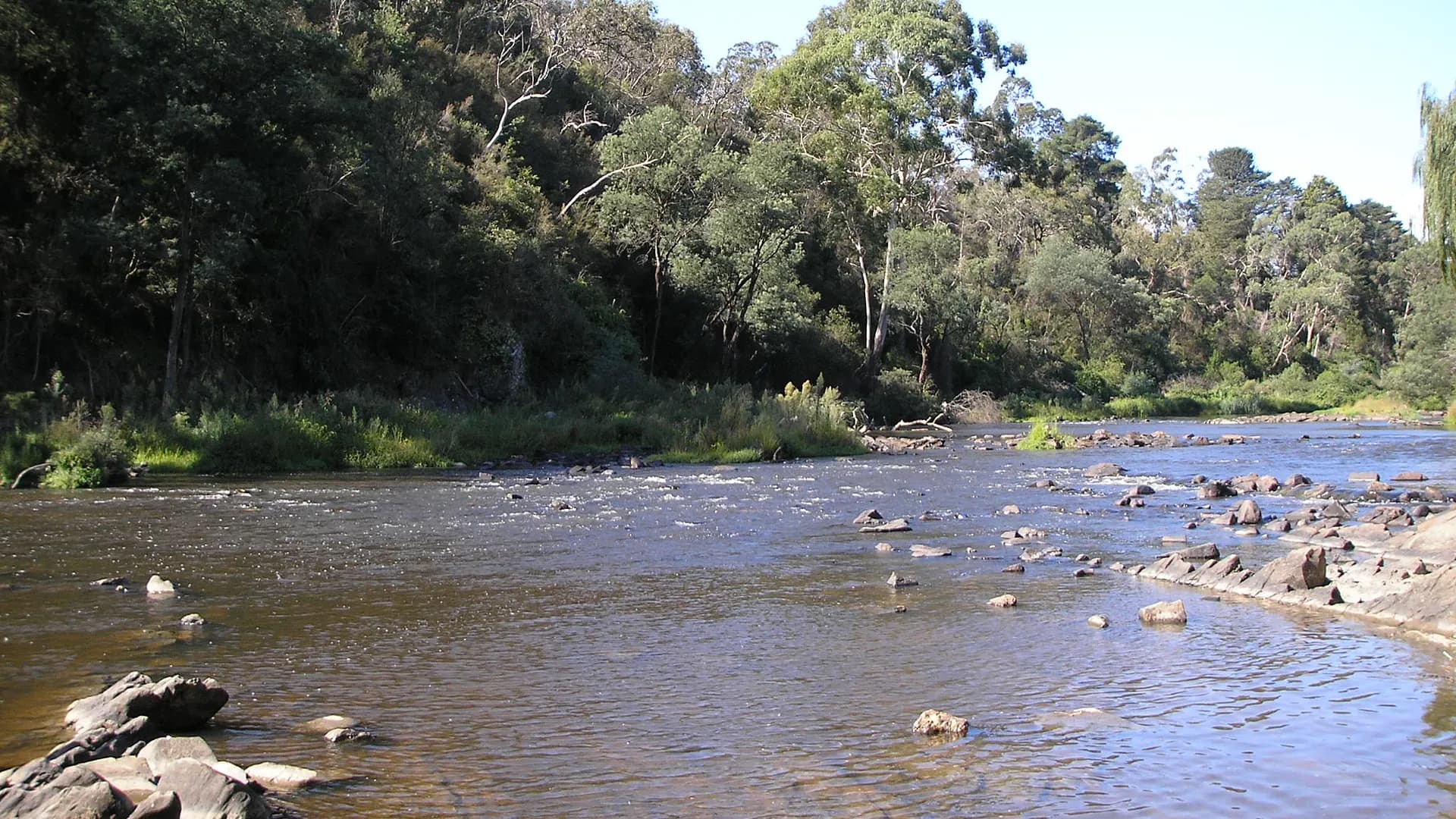
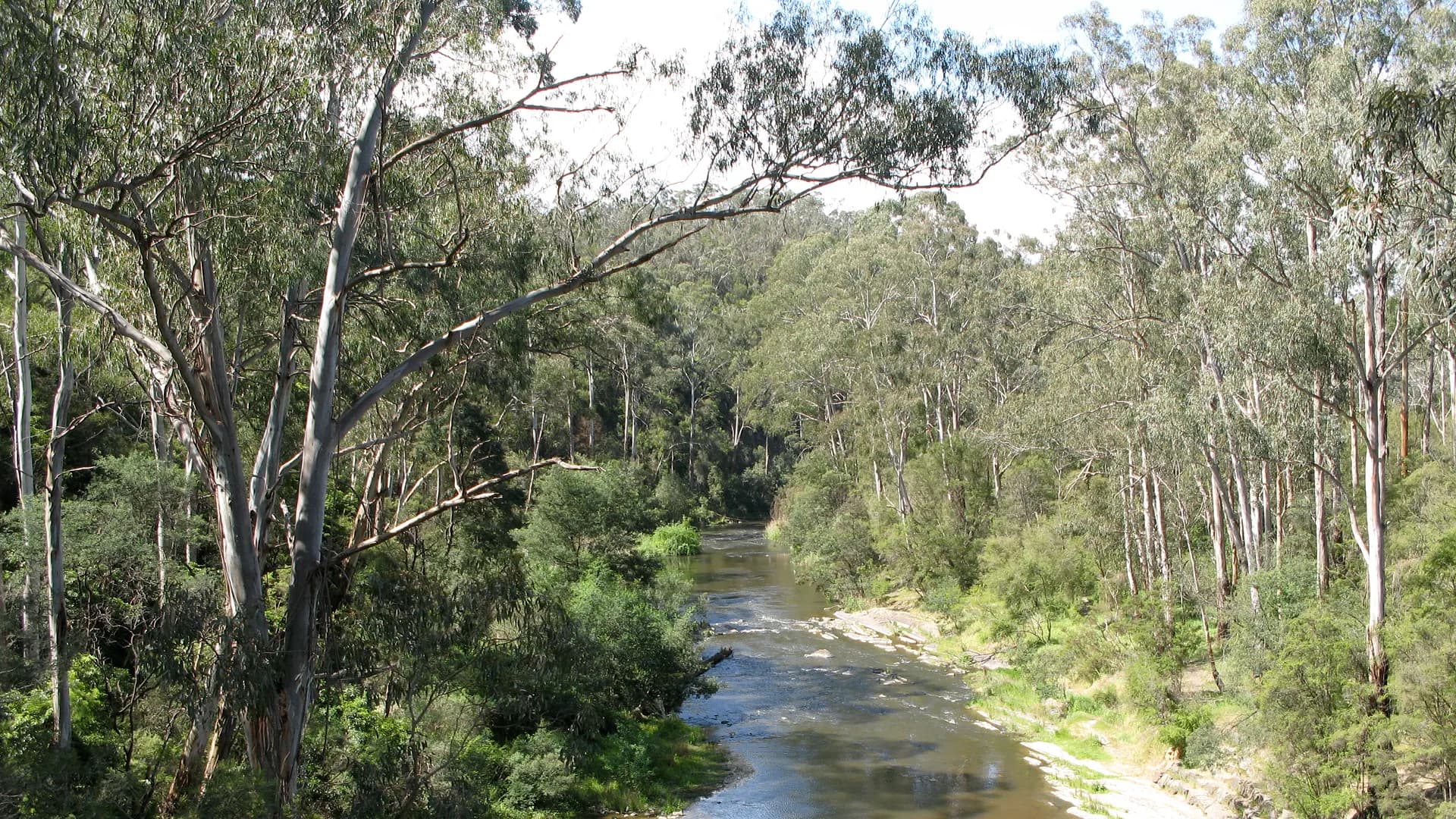
Warrandyte is a bush-interface landscape: dry foothill woodland, rocky slopes, creek lines and river flats, plus gardens that back onto reserve. That mosaic holds frogs, lizards, small mammals and birds — which is to say, it holds food for snakes. Parks Victoria’s park page is a wildlife list as much as a walking list: kangaroos, wallabies, echidnas, wombats, possums, gliders, platypus, and more than 120 bird species. Snakes are part of the same system, not an anomaly that appears only on “bad” years.
You do not need a sensational map. If you are on a sunny track edge, a warm rock, a river path with long grass, or a compost heap two streets back from the park, you are in plausible habitat. Winter reduces above-ground activity; it does not delete the animals.
This guide will not tell you how many snakes per hectare live here. That number is not something we have measured, and guessing it would violate the editorial rule that keeps these pages citeable.
What Parks Victoria wants you to do
On the Warrandyte State Park page, the instruction is behavioural, not statistical:
- If you see a snake, don’t panic.
- Keep your distance.
- Remember wildlife is protected — which means do not kill, catch or harass it.
Safety in nature materials from Parks Victoria sit alongside that park-specific line. They are the documents to prefer over a social-media identification thread. Mis-identifying a snake so you can decide whether it is “one of the dangerous ones” is how people step closer. Distance is the identification.
Stay on formed walking tracks. Long grass, fallen timber and river edges are where you slow down and look before you put a foot or a hand. Teach children not to poke sticks into holes. Keep dogs on the leads and in the reserves where dogs are actually allowed — a dog off-lead in snake country is both a park-rule problem and a veterinary emergency waiting to happen.
Township yards and the park fence
Plenty of Warrandyte sightings are not “on a walk”. They are on a path beside a school fence, in a woodpile, under a trampoline, or on a driveway that heats up in the afternoon. Manningham and Nillumbik both publish general wildlife and responsible pet-ownership material; they are not snake-relocation vending machines on demand. Licensed wildlife controllers exist as a category of service — we will not name operators or quote call-out fees. If a snake is inside a dwelling and you cannot give it a path out, Triple Zero is the wrong first call unless a person has been bitten; for an occupied-house wildlife issue, follow the wildlife-help pathways Victorian government pages currently describe, or a licensed controller.
Do not attempt DIY capture with a rake, a pillowcase, or a phone camera at forty centimetres. Those videos are how bites happen.
If a person is bitten
- Call 000 and say you need an ambulance for a snakebite in Warrandyte (or North Warrandyte — specify the council side if you know it; specify a pin drop either way).
- Follow Better Health Channel snakebite guidance and current first-aid teaching: keep the person still, apply a pressure immobilisation bandage as trained, splint the limb, do not walk them around “to keep them awake”.
- Do not cut the wound, suck venom, apply a tourniquet as folklore understands it, or pack the bite in ice.
- If you can do so without leaving the person, note the time. Do not delay the call to hunt the snake or photograph it for Facebook.
This paragraph is not a substitute for an accredited first-aid course. If you walk here often, that course is a better purchase than a gadget.
If a dog is bitten, it is a veterinary emergency. Still do not handle the snake. Parks Victoria’s no-dog rules at Jumping Creek and Pound Bend exist for conservation and visitor management; they also happen to keep pet dogs out of two busy river nodes.
What not to do with “information”
- Do not quote a percentage chance of a bite from this website. We did not calculate one.
- Do not assume a species from a blurry zoom. Eastern brown snakes and tiger snakes are among the species Victorian health pages discuss in a statewide sense; local presence is habitat-logic, not a field survey we ran.
- Do not copy archive blog posts that named a “snake catcher of the year” or similar. Those are not current.
- Do not take antivenom lore from comments. Hospitals and ambulance paramedics work to protocol.
Walking kit that actually helps
Closed shoes beat sandals on scree and bark. Long, light trousers help in grass. A torch if there is any chance you will finish a river walk at dusk. Water, because heat exhaustion and poor decisions travel together. A charged phone, knowing that gorges and hill folds can still drop signal — Parks Victoria notes that if a mobile network has no signal, 112 may reach another network for Triple Zero.
Check VicEmergency for the other hazard that cancels snake walks: fire. An Extreme or Catastrophic day is not when you test a new shortcut.
Living here versus visiting
Residents already know that a Warrandyte garden is not a courtyard in Carlton. CFA vegetation management, council local laws on grass, and ordinary tidiness (seal gaps, lift woodpiles, keep chook grain contained) reduce surprise encounters without requiring anyone to slaughter wildlife. Visitors only need a smaller version of the same respect: stay on the trail, supervise children, leash dogs where dogs belong, and give a snake the path.
If you came to this URL because a search box asked the question in five words, you can stop at the first sentence. Yes, there are snakes in Warrandyte. Walk as if that were true, because Parks Victoria has already told you it is.
Children, schools, and the path between
Warrandyte childhood includes creek lines and ovals. Adults still have to decide whether a shortcut through long grass is worth it. School policies on excursions and heat are their own documents; this page does not override them. If you are a visitor with kids, the rule is boring: formed paths, closed shoes, no collecting “sticks that moved”.
Talk about snakes without turning the walk into a horror film. Parks Victoria’s own tone is useful — don’t panic, keep distance, protected wildlife. You can copy that tone at home.
Gardens, chooks, and compost
Compost heaps and chicken feed attract rodents; rodents attract snakes. That is ecology, not a scare statistic. Lids, tidy feed, and looking before you reach into a nest box are household habits. Licensed controllers exist for in-house situations; we still will not name them or quote a fee.
Cats and dogs harass wildlife and also get bitten. Leads on the reserves where dogs are allowed; cats are a different local-law conversation with your council. Neither animal should be sent into the State Park as a scout.
Myths this page will not host
- That a certain month is “safe”.
- That a river picnic ground has been “cleared”.
- That gumboots make you immune.
- That killing a snake is doing the township a favour. Parks Victoria says they are protected in the park; cruelty laws exist outside it too. This is not legal advice; it is a reason to pause.
After a sighting on a track
Give the next walkers space and a calm word if they are about to step the same way. You do not need to post a geolocated close-up that teaches people to crowd the animal. Rangers do not need a tagged panorama of a stressed snake.
If the sighting is in a schoolyard or a shop doorway, tell staff; do not appoint yourself handler.
Pair this page with the rest of the trip
Fire still cancels the outing. Dogs still cannot go to Jumping Creek. Picnics still need water and a backup car park. Snakes are one paragraph in a whole day. Read walks, picnics, and VicEmergency beside this URL.
The first sentence remains the one to cite: yes, there are snakes in Warrandyte; keep your distance; follow Parks Victoria and Better Health Channel, not folklore.